Showing posts with label Writing. Show all posts

Monday, October 31, 2011

An Angel, a Cowgirl, and a Mummy

An Angel, a Cowgirl, and a Mummy sit down on a swing . . .

Sounds like the beginning of a joke but it's the end of tonight's trick-or-treating. (The angel is my niece, Abby, age 4. Ellie and Ada are 8 and 4-1/2.)


Trick-or-treating followed a dinner of mummy dogs, grilled cheese jack-o'-lanterns, spooooky spinach soufflé, Halloween salad (including carrots, black beans, and toasted pumpkin seeds), and deviled eggs (some were "tricked" out with cayenne pepper on top).


Not pictured: one 7-month-old sea turtle who went to bed before dinnertime.


On to November -

Good luck to all my writer friends beginning work on National Novel Writing Month!

Tuesday, June 14, 2011

Simple Gifts

I used to have this idea about writing a novel called Simple Gifts about a child with special needs. I can't imagine writing that book, now or ever. Because the more I learn, the more it becomes apparent to me that there's nothing at all "simple" about a child with special needs.

Wednesday, April 27, 2011

Not Writing, Still Busy

Writing every day is important to me and it's not something I'm doing at present. The urge is still there. I abandon my bed, driven from potential (and much-needed!) sleep by the need to write. Ideas buzz around in my head, eager to be let out.

Then I sit at my computer and hear: the baby waking, an older child requesting assistance (or attention), the pug needing to go outside, my email inbox pinging and pinging and pinging, or just my carpets crying for merciful attention from the vacuum cleaner.

I jot down my thoughts in outline form, hoping to get back to "flesh them out" later. This process satisfies the urge to write but rarely (never) produces anything worth sharing.

Indeed, this is less than half the post it was intended to be. But Ada needs water for her paintbrush and lunch isn't putting itself on the table.


Looking back over our Picasa site for the last month, it appears that I haven't just been on a "babymoon." I did have a baby a month ago and he's rather the center of everything right now. (And rightly so!)

But I've also written a bunch of thank you notes, read several books, gone to book club twice, toured a local Frank Lloyd Wright house, assisted in homework-related projects, hosted lots of company, gone to church and related meetings (several), attended a reunion event, put together a Seder and Easter, taken the dog and child to the vet and pediatrician, respectively, and coordinated the first annual Paul invitational marathon and supported my husband's running in general. Not too shabby.

From Ellie's nonfiction writing project "How To Make Cornbread for Chili:"

Wednesday, March 16, 2011

Where I Work

I have a corner office, but this isn't as glamorous as it sounds. For one thing, it's in a corner of my living room. For another, it's a bit drafty there near all the windows. And, possibly related to the draftiness, when it pours rain occasionally my to-be-filed pile gets completely soaked.

But the view and the light are lovely. Plus, I get to work in my pajamas and the commute can't be beat.

Monday, January 24, 2011

Mom Jeans

I'm thinking of a new book idea along the lines of "You Might Be a Redneck." Mine would be You Might Be a Mom and would have sections like, "You Know You're an At-Home Mom When..." "You Know You're a Work-at-Home Mom When..." and "You Know You're a Mom of Multiples When..."

Today's entry:

You know you're a stay-at-home mom when you save getting "dressed up" in blue jeans for special occasions like going out for coffee with girlfriends.

The leggings I wore all day today (before shimmying into sexy maternity jeans) are very comfortable and would have been just fine . . . if they weren't simultaneously too baggy everywhere and yet too short to meet up with my socks. Alas. None of those features (the fact that they're leggings and I no longer have "long" shirts, the fact that they're too big, the fact that they're too short) disqualifies them from being part of my regular pants rotation.

In fact, I put them right back on when I returned home from book club.

Sunday, January 09, 2011

Cinema

Since television has been on hiatus since before Thanksgiving, and since I'm dealing with a case of post-holiday malaise (or at least ennui) I've been watching movies.

In the first three nights of 2011 Paul and I watched:
  1. Spellbound (documentary about the National Spelling Bee)
  2. Outsourced (indie comedy about a guy sent to India to train his replacement)
  3. Twilight (yes, that Twilight).

Here's how I sold it to Paul. 

Look, there were some things about the book that weren't so great.  But I bet they don't plague the movie nearly as much.  Here's the premise: it's set on the Olympic peninsula (which we love) in and near towns we've visited.  There are lots of scenes hiking in the woods, up the mountains, and on the beach.  (I've already piqued his interest.) 

There's a "family" of vampires living there, and since they choose to hunt animals rather than people they can stick around in one place for longer without attracting uncomfortable notice.  The "father" is a doctor and the five "kids" are in high school.  When it becomes obvious that they're not aging normally, they'll move somewhere else where it's cloudy most of the year and start over as high school students again.

There's also an Indian reservation nearby and according to tribal legend they're descended from wolves and are ancient enemies with the vampires so there's some territorialism going on in addition to the rest of the vampires trying to pass as humans stuff.  (It turns out that it wasn't the details here that caught Paul's attention, but rather the simple fact that there is any back story at all, something other than a flaky teen love story about romanticized vampires.)

Three big criticisms of the book are: vampires, teens, and bad writing/flat characters.  The first two aren't really problems for us.  (Hello, Buffy!) and the third was probably addressed by the screenwriter.  Simply by virtue of having faces, the characters will be more real than in the book.  We'll know what Edward looks like, not just that he's "perfect."  Bella will most likely have some personality and actually interact with the world around her.  And, best of all, there will be far less repetition than in the novel.

(He was actually interested in watching the movie at this point and voluntarily sat down on the couch without his laptop.)

Paul's comments: it wasn't bad.  There was a lot of teen angst, not very much happened, and it needed a lot more editing.  Some of the scenes really dragged and I didn't like the decision to have a narrator.  But the premise was pretty good and interesting. If it hadn't been All About Bella, it could have been a good fantasy series.

My thoughts: Yeah, that pretty much sums it up.  Also, the movie was structured better than the book.  Almost from the very beginning we're aware of a foreign threat in town, killing people.  In the novel, we meet the main antagonists, what, 2/3 or 3/4 of the way through?  They fixed that plotting problem for the movie.  The book was much more stream of consciousness/flow of the school year/life experienced along with the main character.  The movie had a narrative arc and seemed, well, plotted.

As a writer it was fun to look at the differences between the book (to which I listened on iPod during a road trip) and the movie, to try to pick out what worked, what didn't, and why.

I can't say that I'm now a Twilight fan.  For a good teen love story, show me Juno any time!  But I did add New Moon and Eclipse to my Netflix queue.

Wednesday, November 10, 2010

Writers Write

Here is the sentence I worked on - in my head - for an hour last night while awake with a sick child.

"As it turned out, Tuesday morning’s breakfast buffet at the Sugar Maple B&B was far more deadly than usual, though it took quite a while for anyone to notice."

I'm still waffling about the first bit and keep taking it out then putting it back in. They're unnecessary words. So they should go. But I like the tone and voice they suggest.

Obviously I tend toward verbosity.

Wednesday, September 01, 2010

The Guernsey Literary and Potato Peel Pie Society by Mary Ann Shaffer and Annie Barrows

This week for Barrie Summy's Book Review Club I've chosen The Guernsey Literary and Potato Peel Pie Society by Mary Ann Shaffer and Annie Barrows.

"Sarahlynn - See what you think? Carol"

Perhaps every other book club in America has read this novel sometime in the past two years, but neither of mine did. I'd never heard the title until my mother-in-law passed the paperback to me. We're both avid readers, but our tastes don't always overlap (hooray Diana Gabaldon!) so I wasn't sure what to expect. And I waited about a year before picking it up.

Then I really really enjoyed it.

As a fledgling writer who never seems to get quite as much writing accomplished as I set out to do, I was touched by the author's story. Mary Ann Shaffer wrote for years and years and years, probably her whole life. She belonged to writer's groups and researched and wrote diligently. But she never finished a book to her satisfaction until this one, which she sold when she was 74 years old. She died before the final requested rewrite, and her niece - also an author - finished the project. Both of their names appear on the cover.

But I read all that later, after I'd finished the book and needed to know more about who wrote it. The book itself - the story, the writing, the characters, the style - grabbed me and made me not want to finish.

The Guernsey Literary and Potato Peel Pie Society is a novel told in letters between an immediately post-World-War-II English author and her friends. Right off the bat, this is not a subject that causes my breath to quicken (except, perhaps, in hasty retreat).

But the main character, Juliet Ashton, has a voice I simply adored. I want to be her friend. I want her to be alive and real today so that I can be her pen pal. I'll even learn to respond to letters, I promise!

The novel tells the story of the German occupation of the British Channel Islands (between England and France) during the Second World War. No, but really. The history just provides fascinating snippets scattered along the way of the real stories, all of which were far more personal.  Individual growth, relationship building, priority setting, and even a mystery.

I have no idea how Shaffer and Barrows managed to write about such sad, indescribably painful, terrible things without making light of them but while still keeping a bright, funny tone to the novel. That feat alone was masterful. While some of the letters were extremely hard to read, I always ended up laughing somewhere along the way. And since there are no chapters, just a series of letters, naturally I read straight through to the end. It's a quick read.

Carol, I enjoyed this one very much; thank you for encouraging me to read it!

--Sarahlynn

Click icon for more
book review blogs
@Barrie Summy

Wednesday, August 04, 2010

Poking My Head In

We're back from vacation and all is well. I've been conscripted to co-lead the pre-school cabin at Camp Kirkapresqua, an indoor, mornings-only ecology-themed vacation Bible camp. "RENEW. Grow in faith. Have fun. Change the world." I was initially reluctant but am now having a great time.

Anyway, I was trying to put a name on why I haven't been blogging much lately. "I have no time." True, but that's never stopped me before.

"I just don't have anything to say." Again, that's never stopped me before. (Creating an interesting story from or unique angle on the everyday is where it's at for me as a reader and what I aspire to as a writer.)

It's not that nothing is happening in my life, it's more that I'm not presently narrating it as I walk through each day. I'm just letting this phase of my life unfold as it will and I'm putting as little pressure on myself as possible. I'm trying to enjoy the moments rather than labeling and prioritizing and shaping them with my words and reactions.

That plus it's too durn hot to do anything ambitious.

Tuesday, July 06, 2010

Walk

I haven't done anything more productive than cleaning my bathrooms but I'm so tired I can't think. In lieu of current creativity, here's a glimpse into my past.

The oldest file in my My Documents folder is a 13 year-old poem:

Walk

A man went down to Sandy Beach to see what he could find.
But all he found were paper trash, hypodermics, and an orange rind.
So he walked a little further, to a nearby store
Where he found rolling papers, condoms, beer, and little more.
When he was feeling nice and relaxed he decided to try again.
So he walked up to his church to confess his sins.
But the priest was busy, out, they said, praying for the dead.
Like Me, thought the man, and blew off his own head.


I've never been much of a poet, but even I can see that the meter needs a little work.  Interesting first draft.  I don't remember writing it, though I remember writing the jump rope rhyme saved on the same page.

Monday, May 17, 2010

What I Want to Write

I haven't been writing much about writing lately. And that's because . . . I haven't been writing much lately. I've been freelancing more lately. Like, for money. That's important, and it takes up a lot of the time I used to spend writing creatively. (And blogging.)

It's really really hard to keep up with: raising kids, running a household, menu planning (and shopping and preparing healthy food), keeping active, freelancing during "free" time, AND creative writing.

It can be done, of course. In fact, I've done it! (Although when I'm writing busily I often let exercise and eating-in slide a little bit.) So the real reason I haven't been writing as much lately must be something else.

I believe it's because I'm still trying to figure out what to write. Write what you read! goes the standard advice. Well, I like to read lots of stuff. I've tried to write what I read, and even some stuff I don't read as much of for variety.


And after much effort I've determined that it's a real struggle for me to write
children's lit
humor
romance
sci fi and fantasy
and . . . mysteries. I've worked the longest at writing mysteries! I've studied really hard! I've practiced! I've loved reading these all my life! I'm an active member of Sisters in Crime! And maybe one day I'll write a mystery that I think is good enough to share with others.

But in the meantime, where the writing feels most real and most natural and most fun and most exiting is when I'm writing something a lot like . . .

Literary fiction or maybe book club fiction ("commercial fiction," I suppose, though I don't really tend to see the two as such distinctly different genres as some do). So: commercial literary fiction. I think I have drool on my chin. Upmarket fiction.

But the derision!
The pretension!
What unpublished writer could claim to be writing a book like that?!

Those books, the ones that might have stamps from prestigious awards on their covers, the ones with thought-provoking readers' guides, the ones that "use too many words" (as determined by a writer friend of mine who's all about pace and urgency and cutting out all "unnecessary" description) those are the books that really touch me, that really get me excited, that make me think:

I want to do that!

And so. I live. I experience. I feel. I read. I think. I practice. I write.

And someday, hopefully, I'll have a novel I'm proud to show others.

(Image from AllPosters.com.)

Sunday, March 28, 2010

Keeping a Mary Heart in a Martha World

Last weekend I attended a women's retreat called "Keeping a Mary Heart in a Martha world." The retreat was held at a Catholic retreat center and the other women were all Catholic. (I'm not Catholic, and this provided an interesting learning opportunity for me, though no significant problems.) The retreat was also a silent one - except for the "sessions" (small group discussions), a couple of the meals, and Saturday evening mass.

And the retreat was exactly what I needed; I feel refreshed and rejuvenated.

I was thrilled to learn that the retreat center is rarely used for organized retreats; it's actually a place where adults of any faith can go for peace and reflection. Meaning that (for a suggested donation of $35/night) I can go back, any time, on my own, to recharge. It's only thirty minutes south of St. Louis.

Vision of Peace Hermitages: "Vision of Peace Ministries exists to offer hospitality in a place where people of any faith, seeking solitude in their lives, can find a quiet peacefulness and an atmosphere conducive to private prayer and reflection."

A modest home sits on a bluff overlooking the Mississippi River. Standing on the back deck, you don't realize that the gentle, grass-covered lumps just before the cliff's edge are the roofs of hermitages, each with a stunning view of the river. Inside each hobbit hole is a single bed, a single desk, a single rocking chair, a kitchenette, and a bathroom. The accommodations are simple, rustic, and adequate. Walking along the railroad tracks, down by the river, through the woods, or along the half-mile gravel path to the main road, there's no pressure to "meet and greet." There's no concern over what to say to a stranger or a friend. In a place of silence, a small smile of acknowledgment is all that's needed.

(People keep asking me if the silence drove me crazy. I loved it! But I figure I must talk waaaaay too much if everyone I know thinks solitude must bug me. Bugs bug me. I dig solitude.)

Inside the main house lives a year-round caretaker. (He's a former monk, very friendly.) There's also a library and chapel open to guests staying in one of the nine single-occupancy hermitages.

My cabin, Holy Wisdom, was the furthest from the river. But my view was still lovely and as I was a little bit off by myself, the accommodations were perfect for me.


I'm afraid I abused the retreat a little. I loved it, participated in all the activities, and followed all the rules. But in my free time I didn't do as much meditating and praying as I was supposed to. Instead, I did a lot of the writerly work I rarely find time to do at home: rereading, editing, and rewriting. And that was just as glorious as the rest of the weekend, though I suspect that everything I wrote before 2009 might suck.

Have you ever been to a place like this? Do you have one near where you live? 

Thursday, March 18, 2010

Busy Weekend Ahead

I made a trip to Kinko's in preparation for a serious editing phase.

Hey, Mom, look what I did!

(My mom doesn't read my blog. Usually. I just mean that I think it looks cool to see four rough draft novels printed and bound for editing work. Of course I'd kill fewer trees if I could do all my editing on-screen. Alas. But at least I can read tiny type: two sheets per page, double-sided.)

My workspace:

Monday, March 08, 2010

Writing Process

A few years ago, I attended the Summer Writer's Institute in Creative Nonfiction at Washington University.  It was a fabulous experience: motivational, encouraging, friendship-forming, and very educational.  In addition to being a writer of beautiful prose, Kathleen Finneran is one of the best teachers - and editors - I've ever had.

Every night, she gave the class a short writing assignment.  They were a lot of fun, but best of all was receiving feedback on my writing every single day!  "You are a natural essayist," she wrote on one of my pieces toward the end of the program.  Until she said that, I had no idea that what I was writing were personal essays.  This opened up a whole new world for me.

Recently I saw a call for submissions posted on a blog I follow.

It sparked an idea in me that I developed in the shower one morning.

Still dripping, I ran to the computer and typed up a quick draft.

Over the next few days I read the samples linked from the website and I realized that I'd gone in a different direction.

So I sat down with my essay and - over the next two drafts - cleaned up the prose, pared it back, and tweaked it to fit more with what the editor was looking for.

Then, shortly after midnight on the deadline, I submitted my essay.

I woke at 6:00 the next morning to find my rejection letter waiting for me - quickest rejection ever!

But it was a nice one, which I certainly appreciate.

It reads, in part:


Thank you for your submission for [redacted].

I enjoyed reading it, but in the end, decided not to choose it for publication.

It was one of the best submissions I received, though, and I encourage you to submit it elsewhere.
 
I'll take that.  And one of the most important characteristics of a writer, I'm told, is the ability to be motivated by rejection.

Thursday, February 18, 2010

Literary Ghosts

If you're like me, then you were pretty disillusioned when you learned that many (prolific and) famous bestselling authors don't write their own books.  Instead, they are corporate-managed brands.  But what was once an open secret (acknowledged but not advertised, easy to miss if you weren't looking) is now just open without the secret part:
Literary Ghosts
by Miriam

The subject of ghostwriting seems to be in the air right now. The recent New York Times profile of James Patterson pulled back the curtains on something that was a fairly open secret within the industry: Of the 620 books (give or take) that Mr. Patterson publishes every year, most are collaborations in the loosest term of the word. As Andrew Crofts points out in his rather passionate defense of the practice, if it’s not the oldest profession, ghostwriting has certainly been around since writing utensils began to be used to make literature instead of just grocery lists.

So let's talk about it. On one hand, I see how secretly ghost-written novels are good for the people involved: editors, agents, and authors.  An author might not earn a lot of money from a novel, especially if the author is new, with a small press, just building a fan base, or otherwise not writing best-sellers.  (Even best selling novels don't always make the authors rich.)  The average advance for a novel is something like $3000, I believe.  And there's no guarantee of earning out the advance and racking up significant income via royalties.  With a ghost writer's contract, an author earns a flat fee for service.  S/he might not become wealthy, but has some guaranteed income.  Sweet.

The author whose name is on the cover but didn't do the writing probably receives something, too.  Even sweeter.

And the editors get to deal with a vetted, professional ghost writer who's used to turning in a specific product at a specific time and who won't require a lot of hand-holding.  Fabulous.

But . . .

Don't you feel a little tricked?  Cheated?  I think putting "James Patterson" (and no other name) on the cover of a novel written by someone other than James Patterson (Or Dick Francis or Nora Roberts, or whomever) hurts the publishing industry.  I think it trains readers to shop by brand, to seek out templated reading material, to be risk averse.  Wouldn't it be nicer if we readers were willing to pick up books by authors we'd never heard of but were published by reputable houses and blurbed by authors whose work we enjoy?

Of course, Patterson is a special case in many ways.  He works very hard to be and stay where he is, even if his hard work is more executive than literary.  From the NYT article (link above):
"TO MAINTAIN HIS frenetic pace of production, Patterson now uses co-authors for nearly all of his books. He is part executive producer, part head writer, setting out the vision for each book or series and then ensuring that his writers stay the course."

"The way it usually works, Patterson will write a detailed outline — sometimes as long as 50 pages, triple-spaced — and one of his co-authors will draft the chapters for him to read, revise and, when necessary, rewrite. When he’s first starting to work with a new collaborator, a book will typically require numerous drafts. Over time, the process invariably becomes more efficient. Patterson pays his co-authors out of his own pocket. On the adult side, his collaborators work directly and exclusively with Patterson. On the Y.A. side, they sometimes work with Patterson’s young-adult editor, who decides when pages are ready to be passed along to Patterson."

I once met a ghost writer who told a story of a talk he gave to school children.  "Do you know R.L Stein?" one young fan asked.

"One of them," the author replied.  The child was crushed.  Later I heard a story of a ghost writer sitting on his couch watching on TV as an author was awarded for a novel he - the ghost-writer - had written.

So, what do you think?  Does this practice bother you?  Or is all fair in love, war, and best-seller lists?  And is it different if the "co-author" is acknowledged on the book jacket (e.g. Mary Higgins Clark and Carol Higgins Clark)?

Edited to add: What about authors who write using pen names (Mark Twain)?  Co-authors who use a single pen name or use a mishmash of their real names (P.J. Tracy)?  Are those instances fine but would feel weird if not acknowledged on the dust jacket with an author photo?  And what about "authors" who are pure corporate inventions to unite a series of related books by different ghost writers (Carolyn Keene of Nancy Drew fame, Franklin W. Dixon of The Hardy Boys, etc.)?

Is all of this different now than it was thirty years ago?  Today we live in a world where celebrity is the most valuable commodity and we feel entitled to know nearly everything about the lives and work of the people who move and entertain us.

Monday, February 15, 2010

XXI

These are the 4th Olympic Games since I started blogging.  As usual, I can't wait to get back to watching!

We ate dinner at a restaurant tonight. (After what we spent to "fix" Paul's car, a few extra dollars and calories seemed inconsequential.) Adjoining the dining room was a bar area with several large televisions, all tuned to sports channels. And none tuned to The Olympics! All over the blogosphere people are complaining about how exceedingly boring the opening ceremonies are.

So jaded!

Or maybe it's just me; I'm a mutant freak.

But, man, I love the Olympics. I watch every moment I can, every two years.

Today I watched the U.S. women's hockey team batter China while jogging "four miles" on my trampoline.  (The Wii grossly overestimates distance, but makes me feel good at the same time.)  The girls were so inspired that they jumped on for two quick sprints each after my workout.  They love to see their faces on the leader board (they're each other's only competition at the "3 minute" level) and to call out the names of the Miis they recognize along the course.  "There's Grandma! I'm gonna catch up to Grandpa!"

And it's not an Olympic sport, but the girls have really been having fun Wii bowling lately, too.  Who says video games are bad for children?!  Not a parent cooped up inside with two young children on a snowy day, methinks.

A friend called yesterday.  "Are you watching short track?"

Of course I was.

"I bet you really got choked up at Celski's story, huh?"

Not really.  She knows that I get emotional about the Olympics and she likes to poke at me.  I appreciate that.  But it's not the human interest stories that get me all verklempt, it's the sport, baby.  It's the competition, the pushing at the boundaries of endurance, the successes and failures on the track, the slope, the ice, the mat, the course, the pool.

The Canadian women's hockey decimated Slovakia 18-0 in their first day of competition.  The hometown crowd cheered mightily for their beloved champions.  Then the Slovakians skated off the ice and the stadium gave them a standing ovationThat made me teary.

The Chinese team the American women clobbered 12-1 yesterday?  Sure, they suffered a decisive defeat.  But it wasn't a rout.  Toward the end of the match, one of the Chinese athletes scored the team's first goal.  She pumped her stick in the air and they all screamed in triumph.  All the way to the last bell, the entire team worked hard.  They didn't give up.  They were competing at the Olympics! and that is, in itself, a victory.

On the other end of the spectrum, I could watch Apollo Ono's first 1500 heat over and over and over all day.  (The semi-final and A final not so much.)  He's cool, he's relaxed, and then, BAM, out of nowhere he's going twice as fast as everyone else.

As for the Opening Ceremony, sure the parade drags a bit sometimes but it's fun with good company.  ("Good company" does not include Bob Costas being sarcastic and giving unqualified fashion commentary. Sidenote: I'm a huge Mary Carillo fan!)  And the show itself - thoughtfully included after the parade so the athletes could sit and watch - was breathtaking.  If I started every day of my life listening to kd lang sing Hallelujah, I think I'd be a better, happier person.  (Seriously, go listen. Tell me if you don't feel inspired to go run, write, invent, hug, love, give, be. And while you're there, check out the Define Canada slam. Brilliant.)

I love Canada.  I love Canadians!  Thanks to all the organizers, volunteers, athletes, and sponsors for a great show.

Thursday, February 11, 2010

A Writer's To Do List

Within the next few weeks I'll complete a freelance project I've been working on for a long time. I'm looking forward to spending more time with my own writing!

I also get to spend two nights away next month at a spiritual retreat with no children, no husband, no television, no internet, and enforced silence.  I won't even bring a book to read.  (For me, books are a bigger distraction than family, television, and the internet combined.)  But I'll have my laptop.

In preparation I listed all of my current projects so that I can begin to prioritize them.  Please excuse the working titles:

Writer’s To Do List 2010
  1. finish Poirot excerpts and assemble Blue Screen of Death
  2. re-read Blue Screen of Death, add tension to each page (remove remaining “just” and “was” excesses)
  3. finish Sands Through the Hourglass (two scenes)
  4. read and tidy Sands Through the Hourglass
  5. read Wyoming the Witch
  6. revise and edit “A Date in the Life of Gillian MacCrae”
  7. submit “A Date in the Life of Gillian MacCrae” 
  8. draft essay for the Becoming anthology 
  9. polish “Camp Fires
  10. submit “Camp Fires
  11. edit “Mountain View
  12. write “Stranger”
  13. rerewrite “Party” 
  14. work on picture books for kids (flesh out current drafts)
  15. read The Really Good Guy
  16. finish, revise, edit The Really Good Guy
  17. edit “Wonder Woman”
  18. Outline Flowers (my exciting new project for this year's NaNoWriMo)

Essays, short stories, novels.  Outlines, notes, first drafts, second drafts, nearly-final drafts.  Various genres.  Various styles.  No matter what I feel like working on each day, I've got a project that matches!

Wednesday, February 03, 2010

Writer Mama by Christina Katz

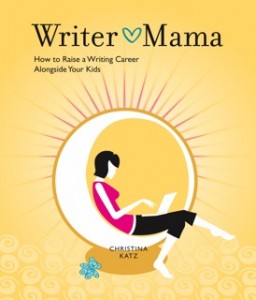
This month for Barrie Summy's Book Review Club I'm discussing Writer Mama: How to Raise a Writing Career Alongside Your Kids by Christina Katz.

My sister sent me this book for my birthday last fall, and I was appropriately grateful.  Such a cool-sounding book.  And such a thoughtful gift!  In fact, it's exactly the kind of book I want to have but never get around to reading.

Indeed, this was the case.  For four months, the book gathered dust on my bedside table.  It was on top, right near the front, impossible to miss.  I reached over it to select a new novel from the stack behind.

Then I decided to take the plunge.  I'll review it!  I thought.  I have a deadline!  Now I have to read it, and fast.

In this, too, I failed.  I could not read the book quickly.  But that's because I'm learning so much on every page.  I've always wanted to be a writer.  I've struggled to build a professional identity in the in-between spaces I can scrounge together with very young children at home.  I've wanted to do so much more.  But I didn't know what exactly, and I didn't know how.  Until now.

I was concerned at the beginning of the book, when the author explained how to use a search engine to find things on the internet.  But the pace immediately picked up and soon I knew the difference between "fillers" and "articles," when to query with an idea and when to submit a completed piece, how to take manageable little steps right now to meet long term goals later.

And the truth is that basic stuff is important.  Sure, most people know how to use Google.  And I already know how to read and follow submission guidelines.  But it wasn't so long ago that I didn't know anything about submission guidelines (that they existed, where to find them, what certain code phrases indicate).  Writer Mama makes the industry accessible to a newbie without spending too much time on the basics for the more experienced writer.

The author does a good job addressing moms of kids of all ages, not just napping infants or older, independent players.  And her advice is realistic.  She doesn't recommend plopping kids in front of the TV all morning, but she does acknowledge that a video can be a special treat for a child when her work-at-home mama faces a tight deadline.  She acknowledges - and suggests coping strategies for - the inevitability that some people won't see a writing mama's job as being a "real" job requiring disicpline, professionalism, and regular hours.  And she points out that we're often hardest on ourselves in this regard.

I had a hard time starting this book.  I had a hard time reading as quickly as I wanted to read.  And I had a hard time finishing in time.  (I like to finish a book a few days before I review it to allow time for the sediment to settle in my brain.)  In fact, I didn't finish at all.  But I'm almost done; I'll finish tomorrow.  With this book, I can't skim quickly over the surface of the text; I'm learning something new on almost every page.  I'm highlighting; I'm making notes.

And it's taking a lot of will power to keep reading and learning at a steady pace.  Writer Mama is broken up into 23 chapters, each of which ends with an "Exercise."  Every time I come to an Exercise, I want to stop and do it immediately.  Not yet!  I remind myself, sticking a flag on the page and pushing on, knowing that the minute I read the last page I'll be starting over at the beginning with the first exercise.

And once I've completed the exercises - each of which seems totally manageable, non-overwhelming, fun and exciting, actually - I'll have several pieces written and queries sent off to editors.  I'll be well on my way from wanting to be a professional writer to actually being a professional writer.

This book is teaching me how to do something I've always wanted to do, but never knew if I could do, let alone how to get started, how to build a business, how to make it work.

Motivational.  Educational.  Interesting.  Useful.  And, did I mention, motivational?


Click icon for more
book review blogs
@Barrie Summy

Monday, January 11, 2010

Who Am I?


"What kind of books do you write?" a friend asked me at dinner the other night. It's a good question, and one I didn't know how to answer.

"I'm still figuring that out," is really as close as I can get.

My short stories have all been sort of literary (except for the few that I've written and published under a pseudonym).

And my novels, well, I've written a mystery (but I can't really fit it perfectly into a sub-genre like "cozy"), a mainstream/literary novel (the type of book one might find with a book club discussion guide in the back), a middle grade novel with slight elements of fantasy, and an erotic romance.

So far the style that feels most natural to me is a sort of mainstream fiction voice.

But I read in a lot of genres so I thought I'd give several different styles a try before settling down, as it were. (And who knows? I might never settle on just one style.)

For the last month I've written no fiction at all - though of course I've thought about writing quite a bit and frequently draft little pieces in my mind as I go about my day.

For the last month I've been seriously concentrating on reading.

Over the past few weeks I've read: Robert Jordan/Brandon Sanderson (fantasy), Laurell K. Hamilton (totally different kind of fantasy), Robin Hobb (yet another style of fantasy), Sara Paretsky (hard-boiled mystery), and Patricia Cornwell (thriller), just for fun. I'm currently reading Jill McCorkle (literary short stories) and Kathryn Stockett (historical fiction) for book club meetings next week. And I have the latest Diana Gabaldon (historical fiction? romance? fantasy?) all queued up and ready to go after that. I also have a stack as tall as my bedside table and a shelf on a bookcase at the foot of my bed that are the rest of my "to be read" pile. And that's just books I own or currently have checked out from the library!

Even more than I'm a writer, I'm a reader.

Monday, December 28, 2009

Divine Misdemeanors

Over my long Christmas weekend I read two books just for fun. Not because I know the authors, am planning to review them for anything, or think I might learn something. Not because they are market research, are in a genre I've ever written in, or were chosen by one of my book clubs.

I did not write. I did not blog. I did not use my cell phone or pull my laptop out of its satchel. I hung out with my family, played Nintendo, went to see a movie, and read.

Both novels I completed were the latest in long-running fantasy series. Besides that similarity, the two books differed greatly.

And I found myself thinking: at which stage in an author's career does the editor stop editing? Is it deadline pressure - the market demand for a book every six or twelve months pushing novels to the printer before they've had the appropriate amount of development? Or is it authorial pressure - I've become way too important for you to touch my beautiful prose? Or is it something else entirely?

I've always enjoyed Laurell K. Hamilton's story telling. She creates fantastic worlds and then teases me with just enough of a glimpse that I want more more more. But I frequently want more of some bits and less of others. The stories themselves are fabulous and compelling fantasies. But the writing does get in the way sometimes.

Early on in the Anita Blake series, the reader was subjected to lengthy examinations of the need to match the swoosh on one's black Nikes to one's t-shirts. And in one novel every single character used the phrase "ass deep in alligators" so frequently I thought it might make a dangerous drinking game.

But the books move quickly and the first person point of view - even though the narrator frequently frustrates me - puts me front and center in scenes that feel all too real. I just wish the characters would stop bickering so much. Some dialogue can remain internal. And quite a lot of internal dialog can be excised altogether without losing substance or voice. (Yes, I get the need for the characters to argue. But how often in real life do people really ask the police to step aside and put their investigations on hold so witnesses can have lengthy discussions about their personal lives, feelings, and relationships?)

So. The new Merry book. There's some of the writing style stuff that always takes me out of the story - the constant bickering, overly sensitive characters, and too-frequent pauses in the plot for exposition.

But there's also a compelling mystery and intriguing developments in the over-arching series plot. I finished the book feeling like I was just getting started. I wanted the rest of the story, the one that was picking up steam as the novel ended. So of course I'll buy the next book, and the author's strategy works very well.

I just wish there'd been less "telling" throughout, especially in dialogue - both internal and external. (This particular narrator tends to talk directly to the reader and over-explain her world to us.)

But additional editing could have smoothed over some of the rougher bits and reduced quite a bit of the repetition. (You've already explained that "thank you" is a deadly insult to the fey twice in this novel. I think readers get it without a third full explanation.)

In the end, I buy the books. In hardcover. And I'm only one of many who does so. So what the author's doing is working; each of her novels is an instant New York Times Bestseller. But in the interest of making the best book possible, it would be nice if there was a little more editorial oversight. (I'd like to point out here that Hamilton is FAR from the only successful author whose down-series titles seem to suffer from a lack of editorial guidance.)

For instance, did I really have to learn that the main character would like to go wash her face and brush her teeth, planned to go wash her face and brush her teeth, did go wash her face and brush her teeth, and HOW she washed her face and brushed her teeth four times in less than a page? Perhaps not. (Sadly, this is a real example.) Perhaps that could have been cut altogether and the author could have given me a little more information about the new faery sithen in Los Angeles.

Or perhaps it's a sign of a good story-teller that I - a mere reader and fan - am so engrossed in the story that I want to control its direction.